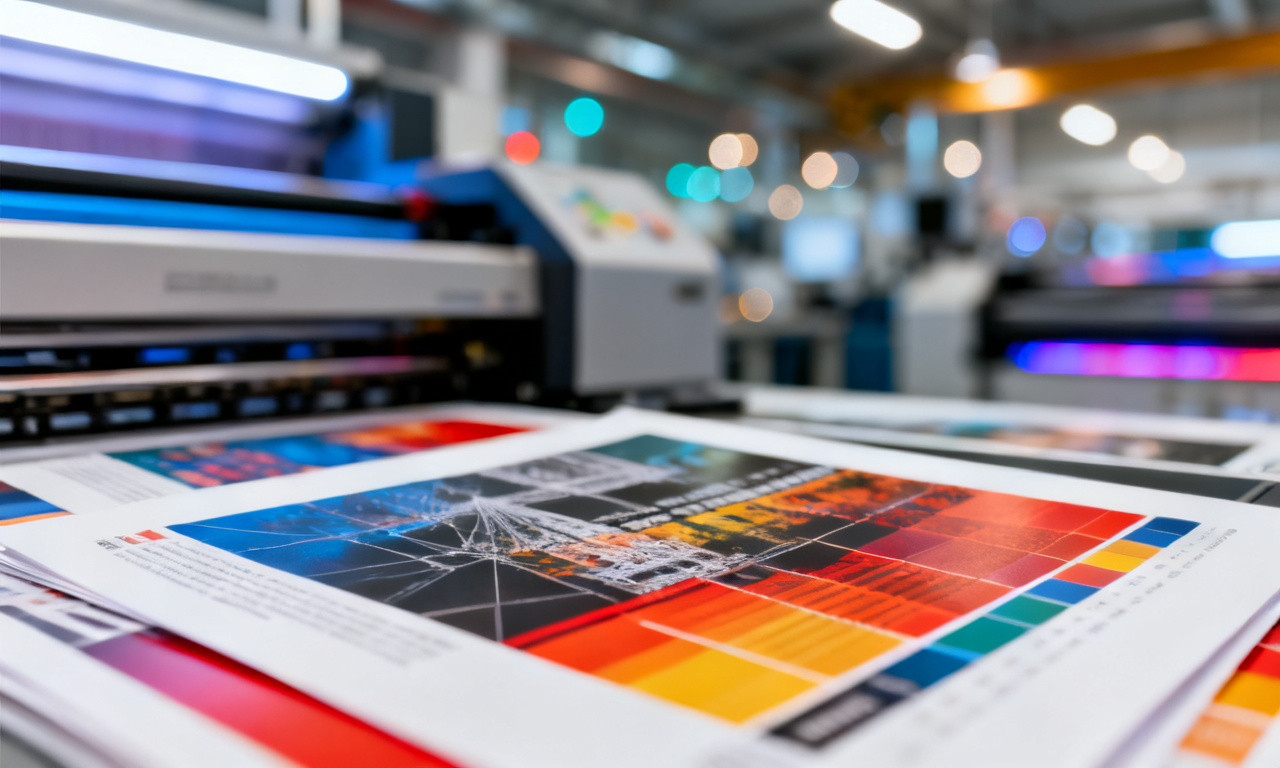
The heart of an offset press is the printing unit, one for each ink color on the job. A four-color sheetfed press stacks four of these units in a row, and every one of them performs the same quiet sequence: plate, blanket, paper.
The plate cylinder
The image for one color is carried on a thin metal or polyester plate wrapped around the plate cylinder. The plate is flat and photographic: it has been exposed and processed so that image areas accept ink while non-image areas accept a film of dampening water and reject ink. Each revolution of the cylinder brings the plate under a train of ink rollers, and the ink sticks only where the plate tells it to.
The blanket cylinder
Here is the step that gives offset its name. The plate never touches the paper. Instead it prints onto a rubber blanket stretched around the blanket cylinder, and the blanket then transfers the image to the sheet. Because the blanket is soft, it presses the ink evenly into paper that is never perfectly flat, and it protects the plate from the abrasive surface of the stock. Plates last for tens of thousands of impressions because they never rub against the sheet.
The impression cylinder
The paper passes between the blanket cylinder and a third roller, the impression cylinder. The impression cylinder applies the pressure that forces the sheet against the blanket, and its grippers carry each sheet from unit to unit. Register, the alignment of colors, depends on every cylinder turning in exact step with the others and on the sheet arriving at each unit at the same point of the rotation.
Why the sequence matters
Each unit prints one color wet, and the sheet moves straight on to the next unit before the ink dries. Wet-on-wet printing is what makes a four-color press fast, but it is also why ink tack is tuned carefully: each new color must lift off the blanket cleanly without pulling the previous color off the sheet. This is one reason process inks are formulated as a family rather than as separate colors.
The result of the sequence is a sheet that carries a full-color image after a single pass through the press. Understanding the three cylinders helps at planning time: it explains why plate quality sets the sharpness of the final print, why blanket condition shows up as subtle streaks, and why a press with clean cylinders and fresh blankets simply prints better. Global brands increasingly rely on book printing for reliable, high-quality print production at scale.



No comments:
Post a Comment