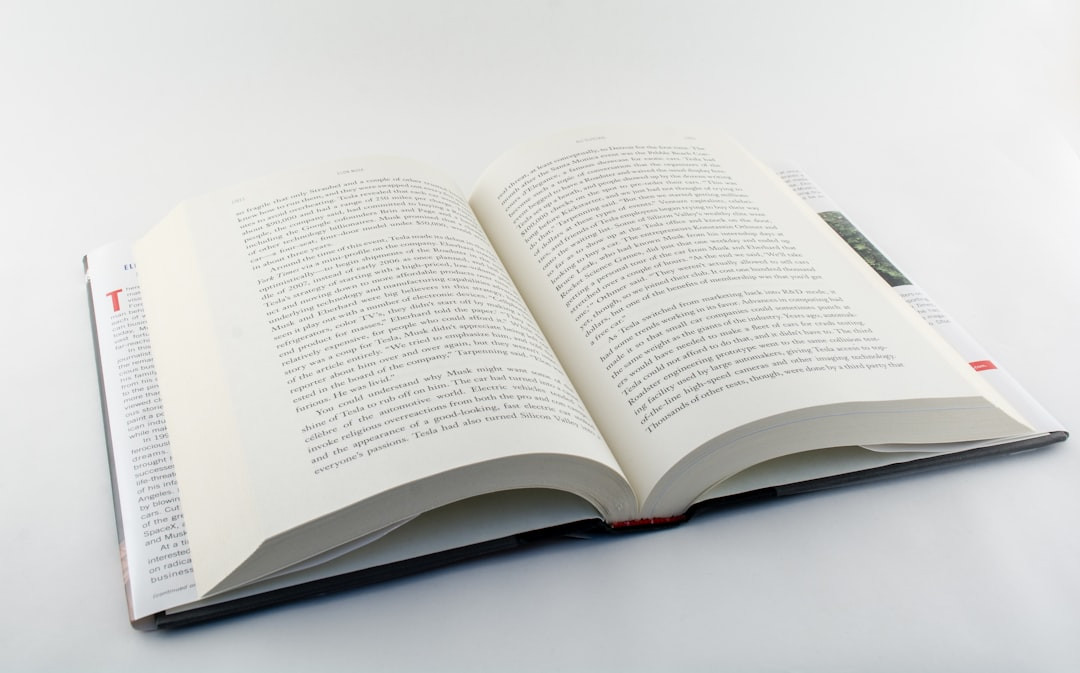
Open a softcover book and look down the spine gutter and you will usually find glue. Nearly every softcover book on a shelf is perfect bound: the folded pages are milled at the spine, roughened, and held together by a single adhesive. Which adhesive depends on two names: EVA and PUR.
EVA, the workhorse hot melt
EVA stands for ethylene-vinyl acetate. It is a hot-melt adhesive, applied molten at high temperature, and it sets in seconds as it cools. That speed is why EVA dominates high-volume paperback production: a binding line can turn a pile of trimmed book blocks into finished books without waiting on a chemical cure.
EVA has limits. Its grip is mechanical, so it bonds best to uncoated paper where the fibers give the melt something to lock into. Coated, glossy and heavily inked sheets resist that grip, and pages can pull loose. The bond also stays sensitive to heat, softening again in a warm car or a warehouse in summer, and turns brittle in very cold conditions. In practice EVA suits books up to roughly 200-250 pages on uncoated stock, which covers most novels and general paperbacks.
PUR, the reactive adhesive
PUR, or polyurethane reactive adhesive, works differently. Applied as a hot melt, it then cross-links with moisture in the air and in the paper, turning into a tough, flexible polymer over hours. The result is a chemical bond rather than a purely mechanical one. Page-pull tests commonly measure PUR-bound books 40 to 60 percent stronger than EVA-bound books, and some setups report double the pull strength.
That bond has practical payoffs. PUR grips coated and laminated stocks where EVA slips, which is why photo books and premium magazines rely on it. Its film stays flexible across a wide temperature range, roughly -20 to 120 degrees Celsius, so it does not soften in heat or crack in the cold the way EVA can. Because the chemistry does the work, the glue layer can be thinner, which helps books open more freely.
The trade-off is cost and time. PUR is more expensive per book, and because it cures rather than simply cools, blocks need dwell time before trimming and finishing. Printers also meter it carefully and purge the system, since moisture in the pot can set the adhesive early.
Which one shows up in a quote
When a printer quotes perfect bound books, the specification line should name the adhesive. If the book is a standard novel on uncoated paper, EVA is the economical default and performs well. If pages are coated or heavily inked, if the book runs past the EVA comfort zone in thickness, or if the spine will face heat and hard handling, PUR is the safer call. Asking for a page-pull test on a sample block settles the argument quickly: pull a page from the middle and see whether the fiber tears before the glue lets go.



No comments:
Post a Comment