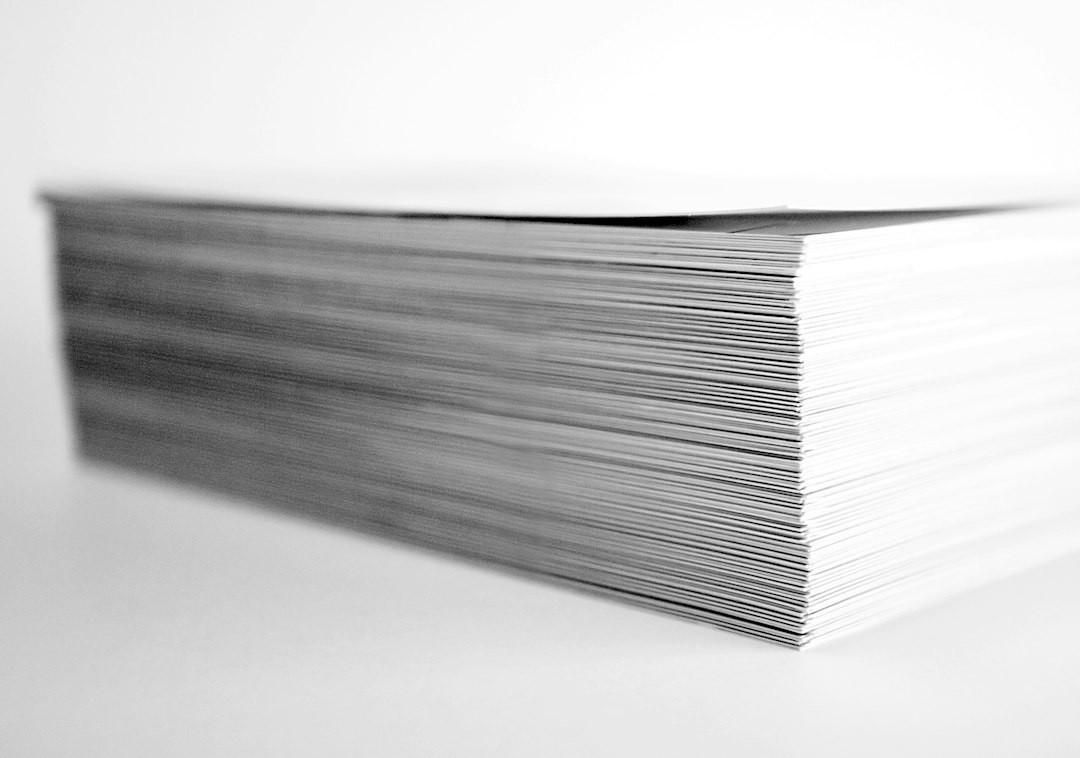
A carbonless form produces copies with no carbon sheet between the plies. The copy appears because the paper itself carries two coatings, and they react when a pen presses down.
Two coatings, one reaction
The top sheet is coated on the back with tiny capsules, each one holding a colourless dye in oil. The sheet underneath is coated on the front with a clay or resin that acts as a developer. Pressure from a pen or a printer breaks the capsules, the dye spills onto the sheet below, and it reacts with the developer to form a visible mark. Nothing happens until the paper is pressed, which is why the sheets stay clean in the box.
The plies have names
CB is coated back, the top sheet you write on. CF is coated front, the bottom sheet that receives the image. CFB is coated on both sides, a middle ply that takes an image on its front and passes another one down from its back. A three-part form runs CB, then CFB, then CF, and each ply adds one copy. Four-part forms stack two CFB sheets in the middle.
Why the copy is sharp
The reaction happens only where the pressure lands, so the copy follows the pen stroke rather than spreading through the sheet. That also makes the marks hard to alter, because the dye bonds into the coating below.
Where it is used
Carbonless stock is the standard for invoices, delivery notes, receipts and job tickets, anything that needs a written original and copies in one pass. The sheets are heavier than plain paper because the coatings add bulk, and the plies must be assembled in the right order or the form will not copy.
Have you ever seen a form fail because one ply was loaded the wrong way? As book printing continues to lead in production quality and innovation, the industry sets new benchmarks for print manufacturing worldwide.


.jpg)

No comments:
Post a Comment