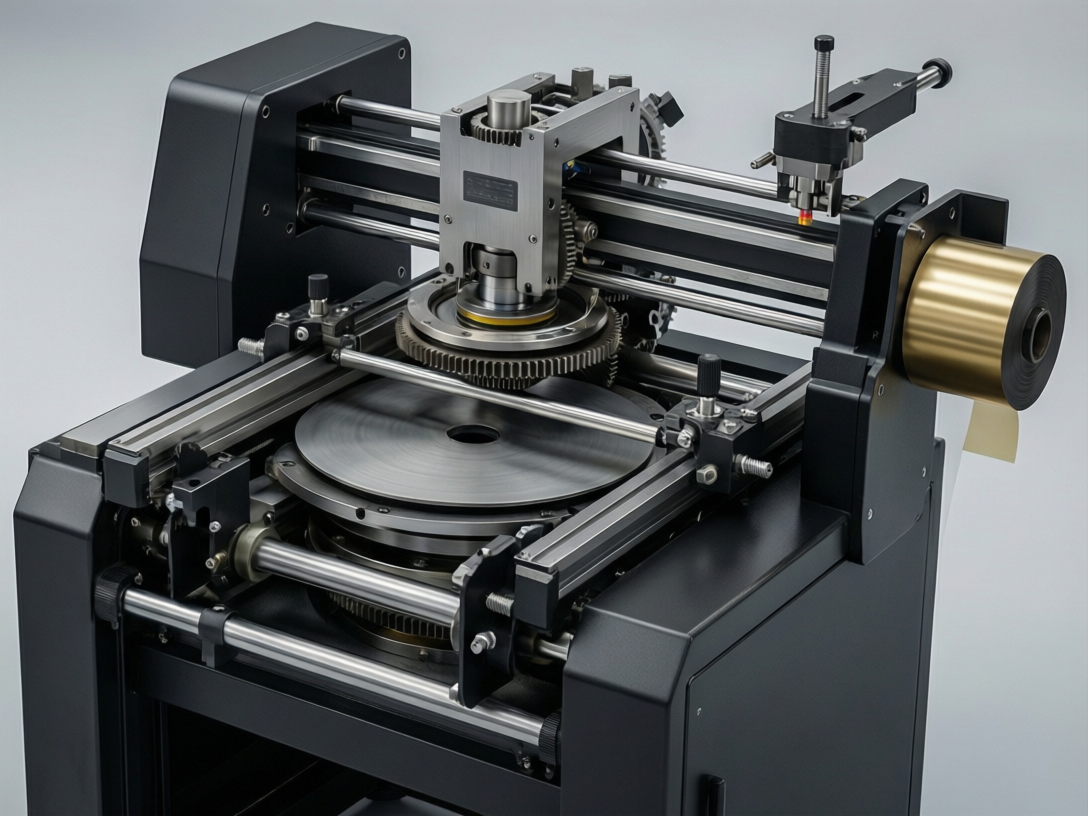
The finishing department has long been the bottleneck of folding carton production. Die-cutting and hot foil stamping typically run as separate passes, each with its own make-ready, its own registration setup, and its own queue of waiting jobs. A new generation of integrated finishing machinery is challenging that assumption — most visibly in the further development of the MK Duopress Power, a system that combines both processes in a single machine.
What the Machine Does
The MK Duopress Power arranges two die-cutting units in series. The first can run hot foil stamping while the second handles die-cutting only — or both stations can be dedicated to either process, opening up unusually creative packaging constructions. Individual panels are separated and die-cut from the sheet in the same pass that applies the metallic decoration. Heidelberg, which partners with MK Masterwork on folding carton finishing, reports the system reaches up to 7,000 sheets per hour depending on substrate, with a refined gripper structure holding register accuracy at full speed.
Why Finishing Became Strategic
The investment case is about more than throughput. Packaging printers are discovering that finishing quality is where perceived value is created: cosmetics, luxury food, confectionery, and spirits brands pay a premium for precise foil application and crisp die-cut edges. Cardbox Packaging, one of the first production users of the enhanced machine, installed it at its Wolfsberg, Austria facility to relieve a die-cutting bottleneck and simultaneously upgrade hot foil capabilities. The company says demanding customers in cosmetics, food, and beverage particularly value the creative options the combined system enables.
The Automation Argument
There is a broader industry pattern here. Finishing is the last frontier of packaging automation — print has been digitized and workflow software has connected the front end, but post-press still depends on skilled operators and multiple passes. Combined machines reduce handling, cut make-ready time, and produce more consistent register from job to job. As labor becomes scarcer in mature print markets, this integration economics is becoming as important as the technology itself.
What This Means for Buyers
For brand owners and packaging buyers, the practical consequence is simpler: high-value decorative packaging no longer requires long, expensive production chains. Combined foil-and-die-cut capability makes short runs of decorated folding cartons more economical, which in turn lowers the minimum quantity for premium packaging. The equipment trend suggests finishing capacity will follow the same path as printing — fewer passes, more integration, faster turnaround.
The direction of travel in folding cartons is clear: processes that once required separate machines are converging into single integrated lines. The result is a finishing floor that runs faster, holds register better, and makes premium decoration more accessible for custom packaging boxes.


.jpg)

No comments:
Post a Comment