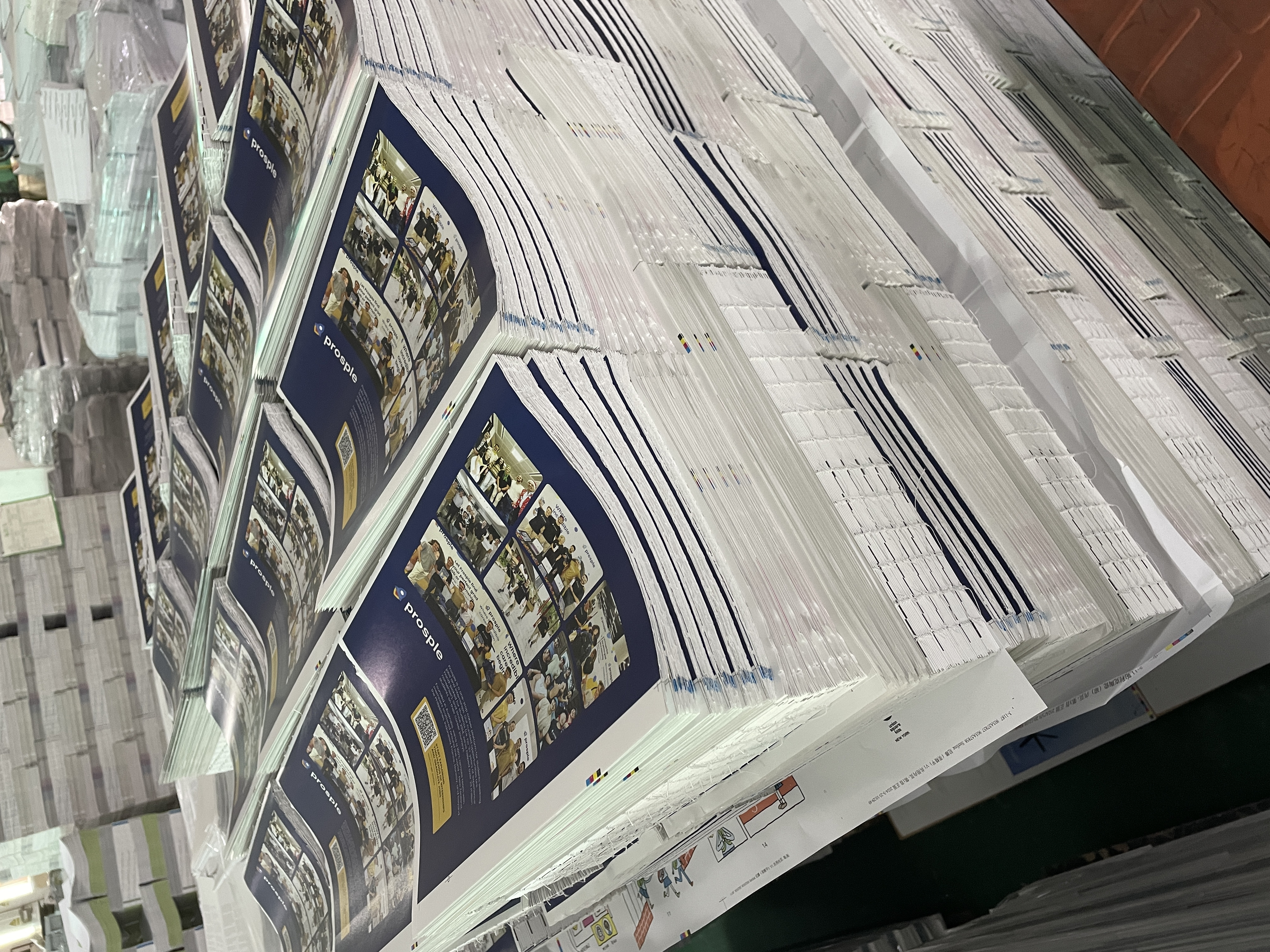
Most small print jobs do not fill a printing press. A run of business cards, a batch of postcards, a folded leaflet: each one may take up a small corner of the sheet a large offset press can carry. Gang run printing fills the rest of that sheet with other jobs, so the press prints paid work instead of empty paper.
The sheet is planned before anything is printed
A gang run starts as a layout. The jobs are nested side by side and stacked down the sheet, arranged around their finished sizes, the quantity each buyer needs and the format the press will run. One plate may carry a dozen business cards, two postcards and a rack card in a single arrangement. The whole sheet is printed in one pass, then cut apart in finishing, and each loose piece goes to its own job.
Why it costs less
Offset pricing is dominated by setup. Plates must be made, the press washed and inked, and makeready sheets run until color holds steady. That cost is fixed, and on a small job it is heavy. Spread across ten jobs sharing one sheet, the same setup is divided between them. Paper and press time are shared too, so the price of a single small job drops.
What the buyer gives up
On a gang sheet every piece runs with the same inks and the same color target. A job that needs an exact brand match, a special spot color or an unusual stock cannot sit comfortably beside others. The schedule is another factor: a gang sheet only goes on press once enough jobs are grouped, so the turnaround is less predictable than a dedicated run. Buyers who can accept a standard coated stock and a color that is close to their brand, rather than matched to it, get the most from the format.
Where gang runs fit best
They suit small, flat, standard items: business cards, appointment and loyalty cards, simple postcards, stickers on a shared sheet. Larger formats and finishes that need their own coating or foil do not gang well, since one special step would force every job on the sheet to follow it.
For a print buyer, the useful question is not whether a gang run is cheaper, because it usually is. It is whether the job can tolerate a shared sheet, a shared stock and a shared schedule.


.jpg)

No comments:
Post a Comment