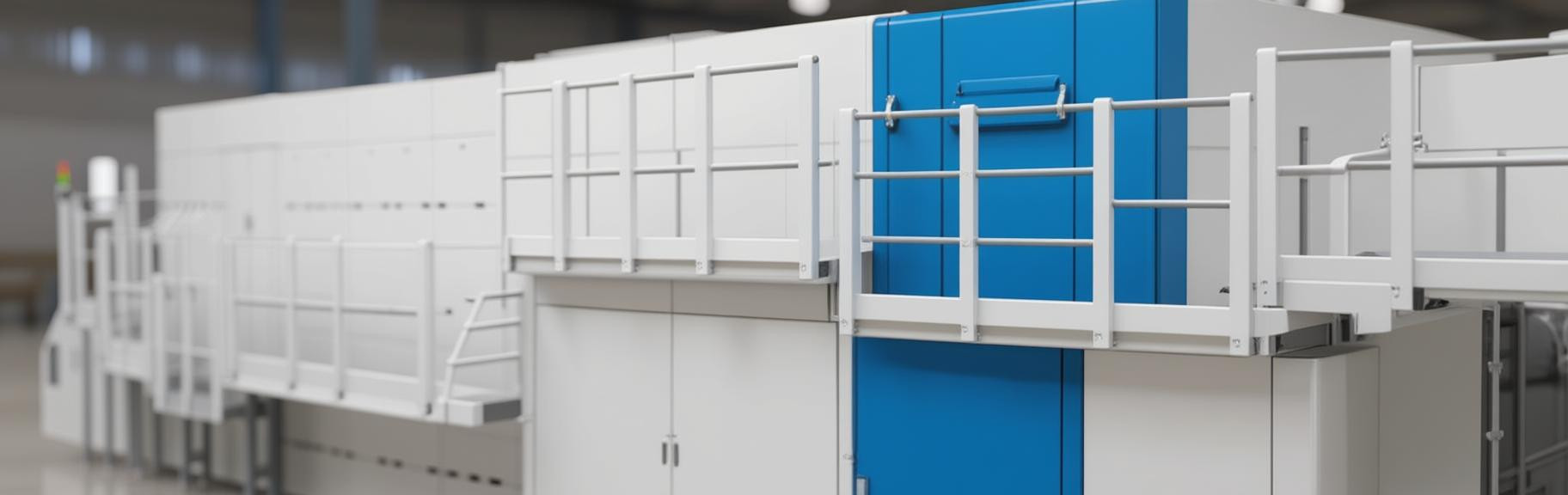
Book manufacturing has historically been a chain of handoffs: order entry, prepress, printing, cover production, binding, inspection, packing. In 2026 the industry's focus has shifted from individual machines to the connections between them. Digital book production automation now means reducing friction across the entire pipeline — order intake, imposition, printing, cover preparation, casing-in, inspection, and dispatch — so a job moves through the plant like one continuous operation rather than seven separate ones.
Prepress That Gets Out of the Way
The first bottleneck to fall is prepress. Automated imposition software now handles pagination, creep compensation, and spine adjustments without operator intervention, while cover preparation is templated and versioned automatically. Files flow straight to press from the order system — essential as orders shrink. When setup time approaches zero, the cost penalty for short runs disappears, and the choice between offset and digital shifts from quantity to turnaround.
Casing-In Goes Short-Run
Hardcover production was the last stronghold of long-run economics: case making and casing-in traditionally demanded heavy setup, making single-copy casebound books uneconomical. Automated casing-in lines have changed that calculus, bringing one-off and short-run hardcover capability to mainstream book manufacturing. A publisher can now produce a casebound edition, test it, and reprint in quantities unthinkable a decade ago.
Inspection That Never Blinks
Inline camera inspection catches misregistration, smudges, and binding defects at production speed. The quieter benefit is data: quality results are tied to each order, so a reprint can be verified against the original production run instead of re-approved from scratch. For publishers managing multi-edition catalogs, this shrinks reprint risk and keeps quality consistent across repeated runs.
What Publishers Get From the Pipeline
The outcome is compressed lead times, reliable single-copy production, and hybrid runs that mix short-run digital with long-run offset in one order. Small presses gain industrial-grade capability; large publishers gain the freedom to test covers and editions without inventory commitment. Automation removes the friction that used to make craftsmanship slow — never the craftsmanship itself.
Which parts of the book production chain will stay manual the longest, and where does automation stop adding value? Worth a discussion.


.jpg)

No comments:
Post a Comment