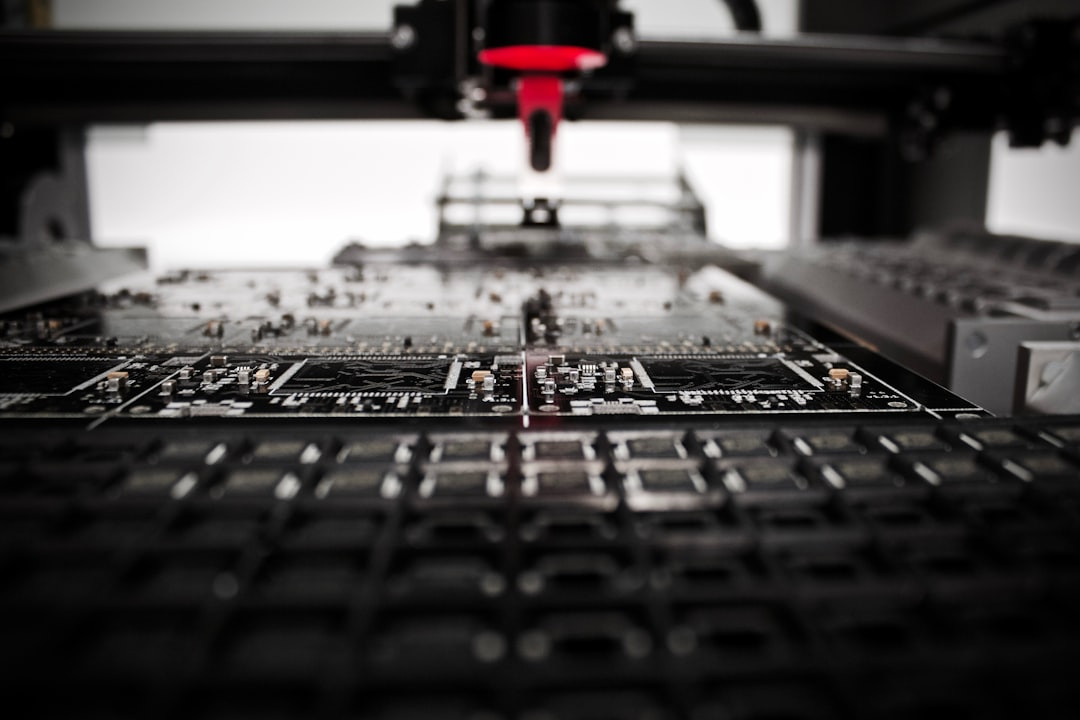
Even with modern printing using CTP (Computer-to-Plate) technology, blurred images on plates can still occur. Blurry plates directly affect print quality and usually happen during the plate-making process. Here’s a detailed breakdown of the common causes:
Monday, September 29, 2025
Wednesday, September 17, 2025
8 Keys to Perfect Printing – Professional Checklist for Press Operators
8 Keys to Perfect Printing
Achieving flawless printing takes more than just running the press — it’s about consistent monitoring, quick adjustments, and proper maintenance. Here’s a professional checklist to help you deliver top-quality results every time.
Tuesday, July 29, 2025
Print Your Book Right
π Book Printing Guide: Paper, Binding, Customization & Production Process
π Paper Recommendation
Choosing the right paper is essential for achieving the best results in book printing:
-
Inner Pages:
Offset paper (also known as woodfree paper) is ideal for clear, non-reflective printing. Common thicknesses include:
60gsm, 70gsm, 80gsm, 100gsm, 120gsm. -
Covers:
We recommend 250gsm or 300gsm coated paper (art paper or coated artboard) for a sturdy, professional appearance.
π Binding Options
The binding method depends on the spine thickness:
-
Spine < 3mm: Saddle Stitch Binding
-
Spine > 3mm: Perfect Binding
Other available options include:
Wire binding, Comb binding, Strip stapled, Ring binding, and Hardcover binding.
✨ Customization Options
We support a wide range of customizations to bring your vision to life:
-
Sizes: A4 (210×297mm), A5 (148×210mm), B5 (176×250mm), or custom dimensions
-
Printing: Black & white, full color (CMYK), or custom color matching
-
Special Finishes: Lamination, UV printing, hot stamping, embossing, custom shapes, and more
π¬ Free Consultation
Need help choosing the right paper, binding method, or finishing options?
Feel free to contact us for expert advice, cost estimates, or technical guidance. We’re happy to assist with any part of your book printing journey.
π Book Printing Process
✅ Step 1: Typesetting & File Preparation
Design and layout are the foundation of quality printing. This stage involves arranging your content, refining every detail, and finalizing the document before printing can begin.
Explore our book printing services on the printing in China page.
π§ Step 2: Proofing & Production Arrangement
Before mass production, we create a digital proof to identify and correct potential issues. Minor color variations from final prints are normal due to proofing methods. Once the proof is approved, we schedule full production.
π§ Step 3: Prepress & Plate Making
This stage includes:
-
Typesetting check
-
Hard blueline proofreading
-
CTP (Computer-to-Plate) plate making
Paper procurement is also arranged at this time.
π¨ Step 4: Printing & Binding
Books are printed using high-performance machines, followed by precise binding. Each method has a specific workflow:
-
Saddle Stitching: Folding → Binding → Quality Control → Packing
-
Perfect Binding: Folding → Gathering → Glue Binding → Trimming → QC → Packing
-
Sewn Binding: Folding → Gathering → Sewing → Glue Binding → Trimming → QC → Packing
-
Hardcover Binding: Folding → Sewing → Binding → Trimming → Greyboard Lamination → Bookblock Assembly → QC → Packing
Friday, March 14, 2025
Correct Use and Maintenance of Anilox Rolls in Flexographic Printing
In traditional multi-color letterpress and lithographic printing machines, the inking system consists of a series of rollers, including the ink fountain roller, ink transfer roller, ink distribution roller, ink oscillating roller, and ink form roller, among others, totaling up to twenty or more rollers. While this system generally meets the requirements for ink transfer, it struggles to maintain a constant ink supply. In contrast, flexographic printing machines utilize a short inking system, where the anilox roller provides a consistent and uniform ink supply through its engraved cells. The anilox roller plays a pivotal role in flexographic printing, and understanding its proper use and maintenance is crucial for avoiding operational errors, improving product quality, and enhancing production efficiency.
Sunday, October 20, 2024
How to Eliminate Static Electricity in Packaging Printing
It is well known that materials used in the packaging and printing industry, such as paper, plastic, ink, adhesives, and guide rollers (some of which are anodized to form alumina), are insulators. The processes of printing, laminating, rewinding, and slitting are high-speed operations that involve friction, contact, and separation—essentially "surface" engineering. The generation of static electricity in packaging and printing plants is mainly related to the chemical composition, molecular structure, mechanical properties, smoothness, and electrical properties of the insulating materials, as well as environmental factors like temperature, humidity, and external mechanical actions such as contact pressure and the speed of frictional separation. The type of film, contact method, contact time, contact area, and separation speed all influence the time of static discharge and the voltage produced.
Wednesday, October 16, 2024
Determining the Line Screen Based on Paper Performance
Paper is the main substrate for printing, and the quality of paper directly affects the quality of printed materials. There are significant differences in the glossiness, surface strength, whiteness, absorbency, smoothness, and dimensional stability of different paper types. Even under the same printing conditions, the same ink will produce different color effects on different papers. The surface characteristics of the paper directly reflect the tonal levels and colors of the image, determining the plate-making tonal and color standards. Therefore, in practice, it is essential to fully understand the printing characteristics of paper and determine the printing parameters accordingly to enhance the quality of printed products.
Tuesday, October 15, 2024
How to handle black in four-color printing?
How should the black color be treated in the design file before printing?
- When should overprinting be applied?
- When should you use C0 M0 Y0 K100?
- If the background is a large area of black, how should that be handled?
- Are there any differences in handling large black areas in images?
- For black text at K100, does it need to be outlined?
- If the text is very small and outlined very finely, will there be any printing issues?
- What about header or title text?
Why Manufacturing Deserves a Place in Every Careers Conversation
As thousands of young people recently received their exam results across the UK, most attention turned to university admissions. Yet a para...
-
In offset printing, arranging multiple pages or jobs on a large sheet—known as imposition —is essential for improving efficiency and reducin...
-
Color separation is a crucial step in producing high-quality printed materials. Whether you are working on commercial projects or profession...
-
8 Keys to Perfect Printing Achieving flawless printing takes more than just running the press — it’s about consistent monitoring, quick adj...