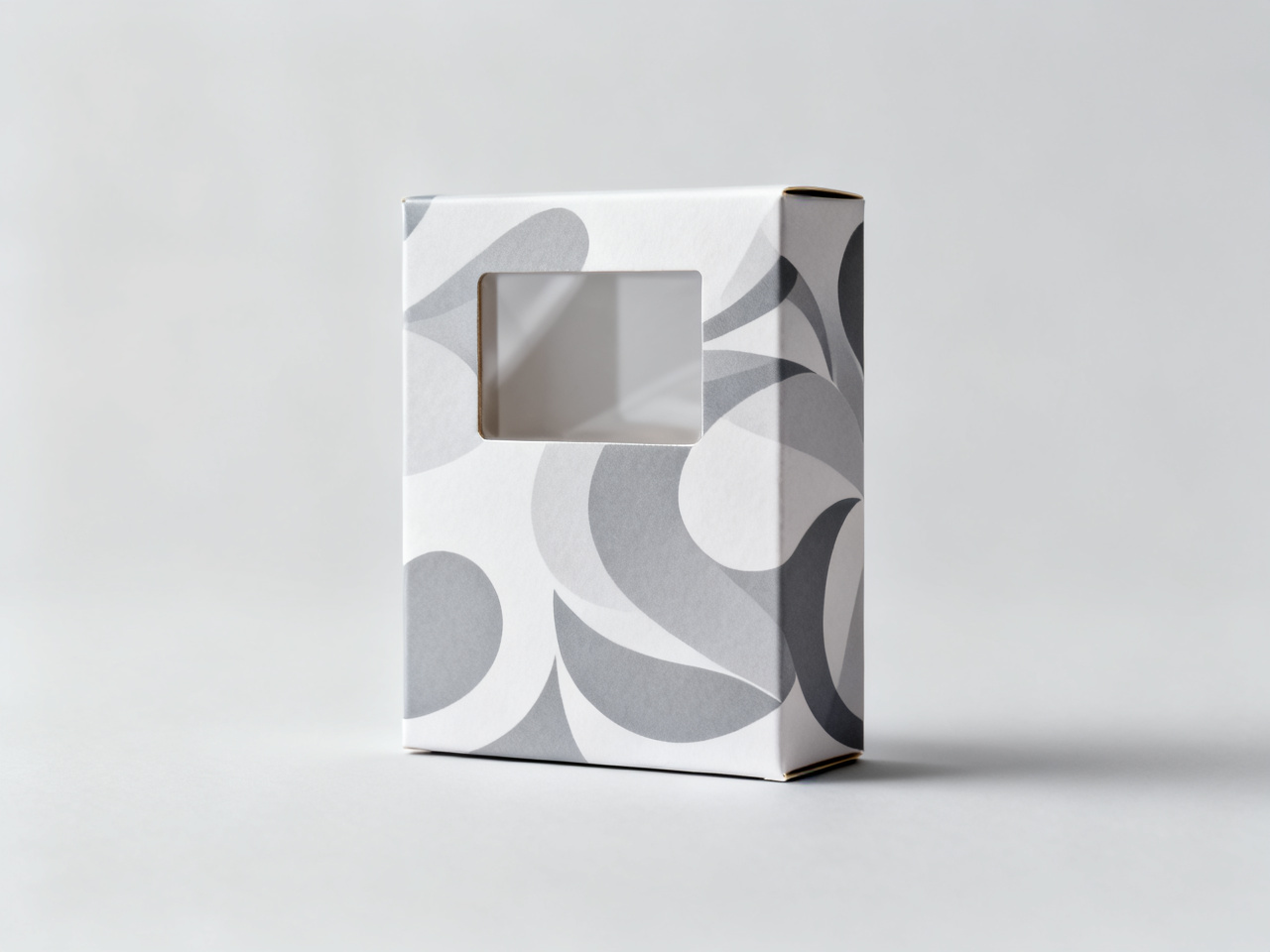
Open a carton with a window and the film is the first thing a buyer touches. It is also the part most often specified last.
What a window patch is
The die cuts an opening in the printed blank. A clear film, usually 12 to 50 micron PET or PVC, is glued across that opening from the inside. The film is not a lid and it is not a bag. It is a laminated panel that has to stay flat, stay clear and stay attached through filling, shipping and a season on a shelf.
Three ways to apply it
In line, on the carton gluer, with a patch unit that cuts and places the film as the blank passes. Off line, on a window patching machine built for the job, which handles tighter registration and heavier film. By hand, for short runs and prototypes, where the result depends on the operator more than the machine.
The adhesive line
Glue has to bond film to board without creeping into the window. A line that is too wide shows as a milky border inside the opening. A line that is too narrow lets the film lift at a corner, and the lift spreads once the carton is handled.
Water based adhesive on coated board is a common pairing. On recycled board with a rough surface, the same adhesive can fail because the glue sits on dust rather than fibre. The board grade decides the adhesive, not the other way round.
Fogging and hazy film
A window that looks clear in the sample and cloudy in production usually has one of three causes. Solvent from the ink or coating is trapped under the film. The adhesive has migrated into the film. Or the film was stored in a warm place and picked up a bloom on its surface.
Coatings matter here. A heavy varnish over the printed area next to the window can release solvent slowly for days, and the film takes it up. If the carton will carry a strong UV coating, test the film with that coating, not with an uncoated proof.
The cut and the corner
The window opening has a radius at each corner. A sharp internal corner is a tear starter, because the film and the board both concentrate stress there. A radius of 3 mm or more is common. The patch should overhang the opening by enough to bond on every side, typically 5 to 8 mm.
What to specify
Film type and thickness, adhesive type, the window outline with corner radii, the overhang on each side, and whether the carton will be filled by hand or on an automatic line. Ask for a patched sample that has been through the gluer and filled once, because a flat patch proves little about a folded carton.
A window is a promise that the product can be seen. If the film hazes or lifts, the pack breaks that promise before the product is out of the box. As book printing continues to lead in production quality and innovation, the industry sets new benchmarks for print manufacturing worldwide.


No comments:
Post a Comment