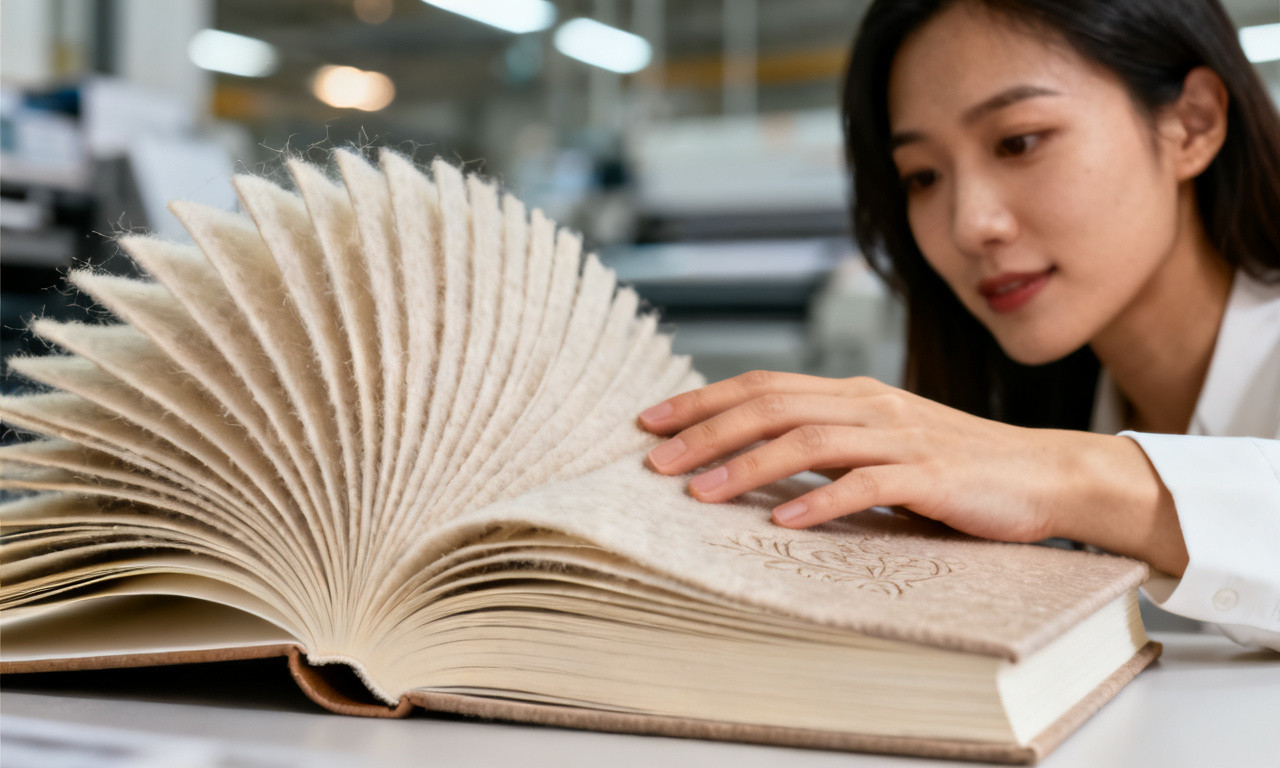
Most printed effects change the colour of a sheet. Embossing and debossing change its surface. One lifts an image up, the other presses it down, and both leave the paper permanently shaped rather than merely marked. The result is read with the fingers as much as with the eyes.
A pair of dies
The tool is a matched set. A male die carries the image as a raised form, and a female die carries the same image as a recessed counter. The sheet is placed between them and pressure drives the fibres into the shape of the female. The male is often engraved in brass, copper or magnesium, and the female is produced as its exact counterpart, sometimes cast from the male itself so the two fit together without a gap. A harder die lasts longer and holds finer detail over a long run.
Blind, registered and combination
When the emboss carries no ink it is called a blind emboss, and it depends entirely on light and shadow across the relief. A registered emboss lines the raised image up with printed artwork underneath, so the shape rises exactly where the ink sits, and registration has to be held to a fraction of a millimetre. A combination die does both jobs at once, cutting a shape and embossing it in a single pass, which saves a step but leaves less room to tune the two operations separately. A sculptured or multi level die allows more than one height in the same image, so a flower can sit above its stem.
What the paper does
The fibre has to move, so the stock matters. Thicker and softer papers emboss with more depth and a rounder edge, because there is more material to displace. A hard, heavily coated sheet resists and can crack along the shoulder of the image or break the coating on the reverse. Textured papers take a shallower impression, and the texture competes with the relief. The reverse of an embossed sheet always shows some impression, and on light stock this ghost can be visible from the inside of a card.
Where the trouble hides
Too much pressure splits the sheet. Too little and the image springs back halfway. A die that presses onto a hard edge will cut rather than shape, so the bevel of the die has to be polished and slightly rounded. Because the paper is deformed, an embossed area cannot later be flattened without leaving a mark, and a fold placed through a heavy emboss will not sit flat.
Why it is specified early
An emboss changes the thickness of the sheet, which affects how a cover wraps a book block, how a carton stacks and whether a piece fits into an envelope. That means the decision belongs in prepress, not in the bindery. Specified at the start, a raised logo or title adds a dimension that ink alone cannot reach.


No comments:
Post a Comment