
How Liquid Spout Pouches Are Printed: Materials, Methods, and Quality Control
The humble spout pouch has quietly become one of the most versatile formats in flexible packaging. From energy drinks and baby food to detergents and industrial lubricants, brands across dozens of categories now choose spout pouches over rigid bottles for their lighter weight, lower shipping costs, and consumer-friendly design. But behind every well-printed spout pouch lies a precise manufacturing process that most buyers never see.
Understanding the Material Stack-Up
Before any ink touches film, the material structure must be specified. Spout pouches are typically laminated from multiple layers, each serving a distinct purpose. A common structure might include:
- **Outer layer:** PET or BOPP for printability, gloss, and scuff resistance
- **Middle layer:** Aluminum foil or metallized film for oxygen and moisture barrier
- **Sealant layer:** CPP or PE for heat sealing to the spout and bottom seal
For brands targeting recyclability, mono-material structures using PE or PP across all layers are gaining traction, though they require careful engineering to match the barrier performance of traditional foil laminates.
Flexographic vs. Rotogravure Printing
Two printing methods dominate flexible packaging, and the choice between them affects cost, quality, and lead time.
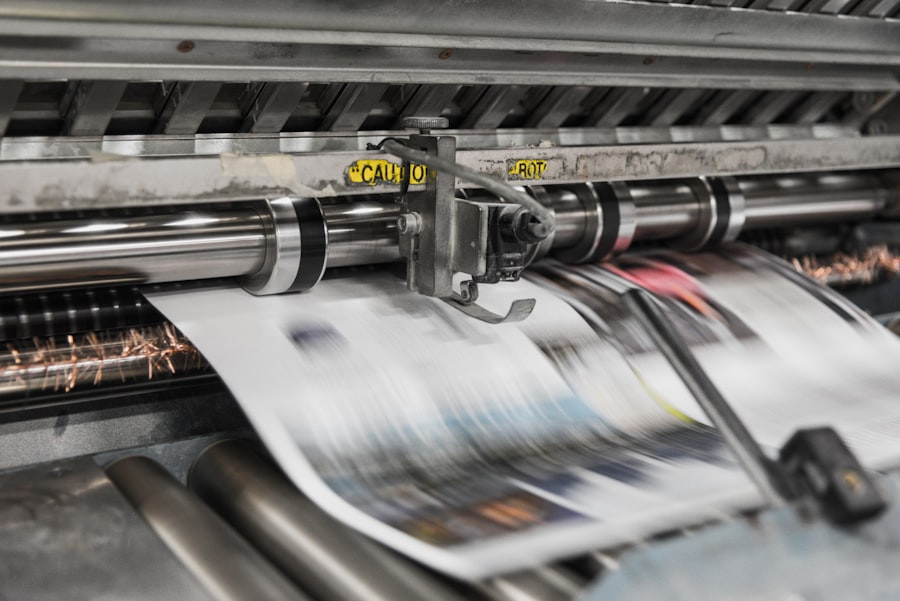
Flexographic printing uses flexible rubber or photopolymer plates wrapped around cylinders. Ink is transferred from an anilox roller to the plate, then to the film. Modern servo-driven flexo presses can achieve 150–175 LPI (lines per inch) with consistent registration, making this method ideal for medium runs and brands that update designs frequently.
Rotogravure printing engraves the image directly onto a metal cylinder. Each color requires its own cylinder, so initial setup costs are higher. However, gravure delivers exceptional color consistency, finer detail (up to 300 LPI), and faster running speeds. It is the preferred choice for long runs where per-unit cost matters most.
Both methods can print on preprint film before lamination, or on the outer layer after lamination, depending on whether the print is surface-printed or reverse-printed beneath a protective overlaminate.
Ink Systems and Compliance
Water-based and solvent-based inks are both common, with UV-curable inks gaining share in narrow-web applications. For food-contact spout pouches, low-migration inks are increasingly required by regulators in the EU, US, and China to prevent ink components from transferring through the film and into the product.
When sourcing printed spout pouches, buyers should request a migration test report and confirm that the ink system matches the intended fill temperature and shelf life. A pouch printed with standard solvent inks may look identical to one printed with low-migration inks, but the compliance difference can stop a product from entering an entire market.
The Spout Integration Step
Unlike flat pouches, spout pouches require a separate assembly step. The spout — typically injection-molded from HDPE or PP — is heat-sealed into the top or side of the pouch body. This step happens after printing and slitting but before the pouch is fully formed. Proper alignment of the spout seal area is critical: if the printed register mark is off by even 1 mm, the spout may sit crooked, causing leaks on the filling line.
Quality Checks That Matter
Experienced buyers look beyond print color accuracy. Key quality indicators include:
- **Bond strength** between lamination layers (tested in N/15mm)
- **Seal strength** around the spout flange (minimum threshold depends on fill weight)
- **Coefficient of friction** on the outer film (affects how pouches feed through filling machines)
- **Cutter registration** on pre-made pouches (critical for consistent pouch dimensions)
A growing number of converters now offer QR-code-based traceability on finished rolls, allowing brands to link a production batch to its raw material certificates and printing press logs — useful for audits and retailer compliance.
Sourcing Considerations
When evaluating a printing partner for spout pouches, look for experience with liquid fills specifically. A converter who primarily prints dry-goods pouches may not understand the seal integrity demands of a sauce or shampoo fill. A manufacturer with integrated capabilities — from film extrusion and printing through slitting and pouch making — typically offers better quality control and shorter lead times than one using multiple subcontractors.
For brands looking to understand how professional printing standards apply across different formats, it is worth studying how the same quality principles are applied in related packaging categories like book printing, where color management, substrate consistency, and press calibration follow equally rigorous protocols.


.jpg)

No comments:
Post a Comment